Challenge 1: Borrowing Costs 4–6% Above ICE Vehicle Loans
EV loans from NBFCs carry interest rates of 14–18%, compared to 10–13% for equivalent ICE vehicle financing. The premium reflects genuine lender uncertainty — about residual values, battery degradation, and the absence of a robust secondary market — not actual default experience (which is limited in volume). The solution is accumulating verified performance data from existing EV portfolios at scale, so that actuarial pricing can replace uncertainty premiums. RBI's PSL extension to EV infrastructure is also beginning to reduce funding costs for qualifying lenders. Full interest rate parity with ICE financing is likely 3–4 years away as the data accumulates.
Challenge 2: Thin-File and No-File Borrowers
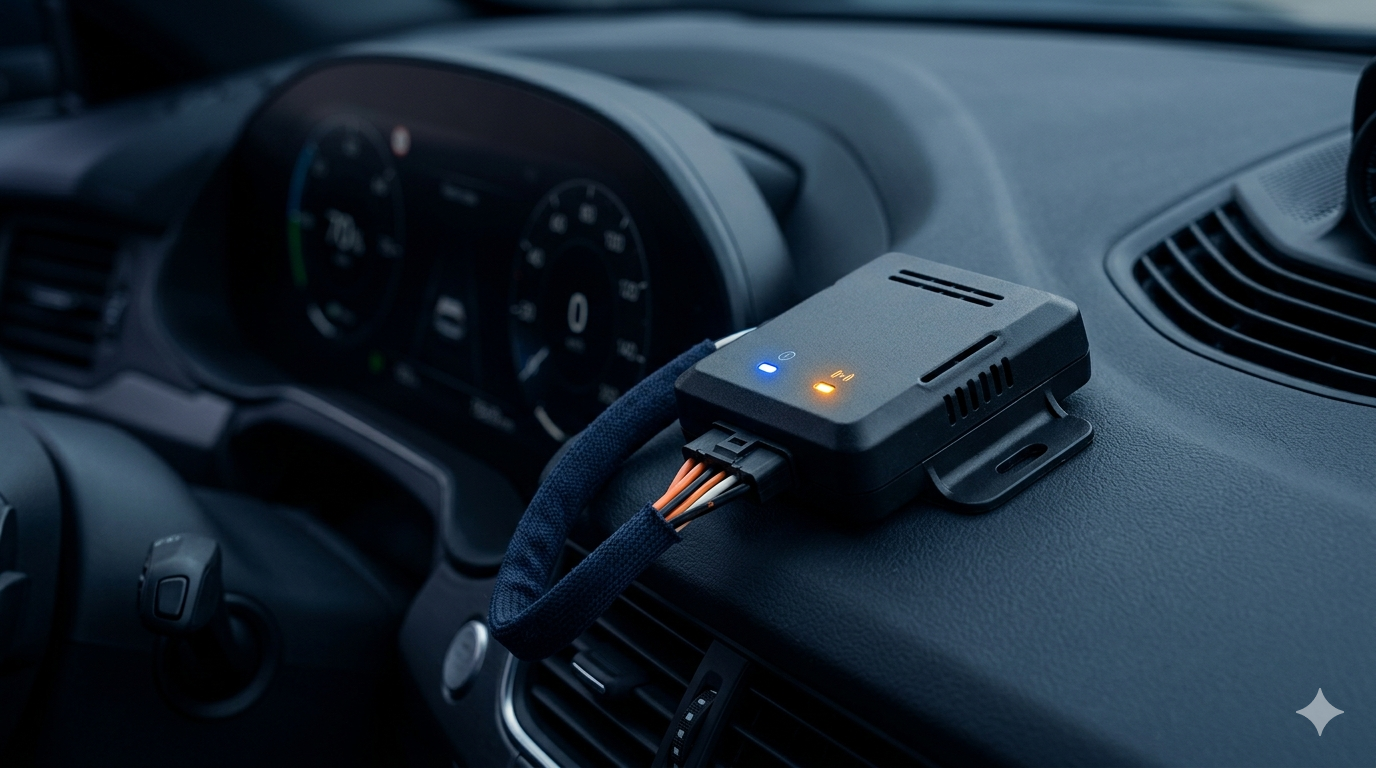
Approximately 55–60% of commercial two-wheeler and three-wheeler EV buyers have limited or no formal credit bureau history. Bureau-based underwriting produces high rejection rates for this population regardless of their actual creditworthiness. The alternative — telematics-based underwriting using observed vehicle utilisation, charging behaviour, and earnings proxy data — is technically viable today. It requires lenders to build or buy the data infrastructure to receive and interpret this data, which most have not yet done. This is the single most impactful change the EV lending market can make in the near term.
Challenge 3: Battery Warranty Ambiguity
OEM battery warranties in India range from 2–8 years, with conditions that vary significantly in their clarity. Many warranty documents contain exclusion clauses broad enough to deny claims for normal operating conditions. For a lender whose collateral includes the battery, unclear warranty terms translate directly into uncertain residual value. The industry needs standardised, independently verifiable battery health certification — analogous to the fitness certificate for ICE vehicles — to create a functioning secondary market and remove this underwriting uncertainty.
Challenges 4–6
- Challenge 4 — Secondary market immaturity: An ICE three-wheeler can be resold in 24–48 hours through established dealer networks. EV resale markets are nascent. The Battery Health Certificate concept — a standardised, telematics-verified report on cycle count, remaining capacity, and operating history — is the data product that will unlock EV resale markets. Several industry bodies are working on this standard.
- Challenge 5 — Insurance gaps: Standard commercial vehicle insurance does not cover battery replacement cost, which is the largest single repair expense an EV operator faces. Bundled battery insurance products are beginning to emerge from domestic insurers, but coverage terms and claim settlement processes are still maturing.
- Challenge 6 — Digital onboarding friction: Manual KYC and physical vehicle inspection add 5–7 days to loan processing, with high dropout rates. E-KYC, Aadhaar-verified registration, and digital vehicle inspection through telematics images are the components of a same-day disbursement process that the market needs to serve high-volume, low-ticket EV lending efficiently.
The common thread across all six challenges is data. Better asset data reduces interest rate uncertainty. Telematics data substitutes for credit bureau data. Battery performance data resolves warranty ambiguity and enables secondary markets. Every one of these problems is solvable, and the platform infrastructure to solve them is being built now.
EVBooth's Contribution to This Data Layer
EVBooth's CMS and EMS platforms are a source of verified operational data on two of the asset classes most relevant to EV financing: charging infrastructure and solar-BESS installations. For financing institutions lending against these assets, we can provide continuous, API-accessible performance data — removing the need for periodic physical inspections and enabling covenant monitoring based on actual operating metrics. For solar financing specifically, our EMS provides the additional capability of remote plant management — including the ability to manage plant operation parameters to protect the loan asset if needed. If you are an NBFC or bank exploring EV or solar asset financing and want to understand what data we can provide, we welcome the conversation.