The Model Setup
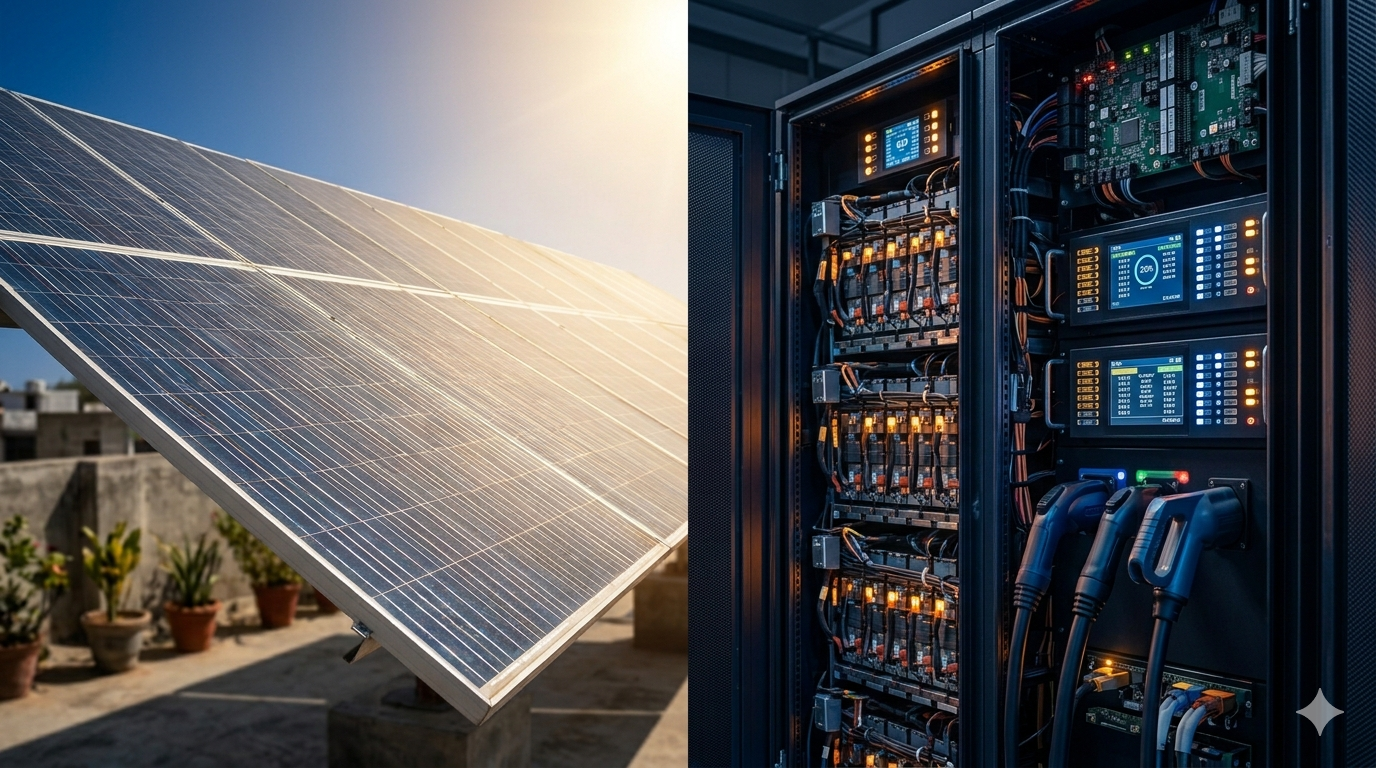
This analysis models a mid-sized commercial EV charging hub: a roadside location in Bengaluru with 6 AC chargers (7.4 kW) and 1 DC fast charger (60 kW), targeting 50–70 charging sessions per day at an average of 10 kWh per session. The solar-BESS system is sized at 50 kW rooftop and 100 kWh LFP battery — a conservative configuration that can be scaled up as utilisation grows.
These numbers are modelled from publicly available equipment costs, BESCOM tariff schedules, and industry utilisation benchmarks — not from a specific deployed project. They should be treated as indicative, not guaranteed.
Indicative Capital Cost Breakdown
- 6 × AC chargers (7.4 kW, OCPP 2.0.1 networked): ₹8.4 lakhs
- 1 × DC fast charger (60 kW, CCS2 + Type 2): ₹15–18 lakhs
- 50 kW solar PV system (rooftop, Tier-1 panels): ₹20–24 lakhs
- 100 kWh LFP BESS (containerised, BMS included): ₹60–70 lakhs
- Civil works, electrical, installation: ₹12–16 lakhs
- Total indicative capital: ₹115–130 lakhs
Revenue and Operating Cost Assumptions
At 60 sessions/day × 10 kWh × ₹13/kWh retail, gross session revenue is approximately ₹28.5 lakhs/year. Solar self-consumption (estimated at 60–70% of generation) reduces energy procurement cost from ₹8.5/kWh to approximately ₹5.8/kWh effective — saving roughly ₹8–10 lakhs/year. Net metering credits on exported surplus add ₹1.5–2 lakhs/year. Annual operating costs (DISCOM energy, O&M, insurance, platform fees) run ₹12–16 lakhs. Indicative annual EBITDA: ₹18–25 lakhs.
At these numbers, simple payback runs 5–7 years at conservative utilisation, improving to 4–5 years at 80 sessions/day. Accelerated Depreciation at 40% in year 1 on BESS and solar equipment (approximately ₹20–23 lakhs tax benefit for a corporate operator at 25% tax rate) brings effective payback down by 12–18 months. These are realistic numbers for a well-located site — not best-case projections.
The Key Sensitivities
This model is most sensitive to daily sessions (utilisation) and the trajectory of DISCOM tariffs. A site that achieves 40 sessions/day instead of 60 extends payback to 8–10 years — marginal but not undoable over a 15-year asset life. Conversely, as BESCOM's commercial tariff rises (it has averaged 6% annual increases over the past decade), the value of solar self-consumption increases proportionally — making the solar-BESS investment a natural hedge against energy cost inflation. We recommend any operator evaluating this model to run it with their specific location's tariff structure and realistic utilisation estimate, not a best-case assumption.